Antidiabetic Drugs Classification
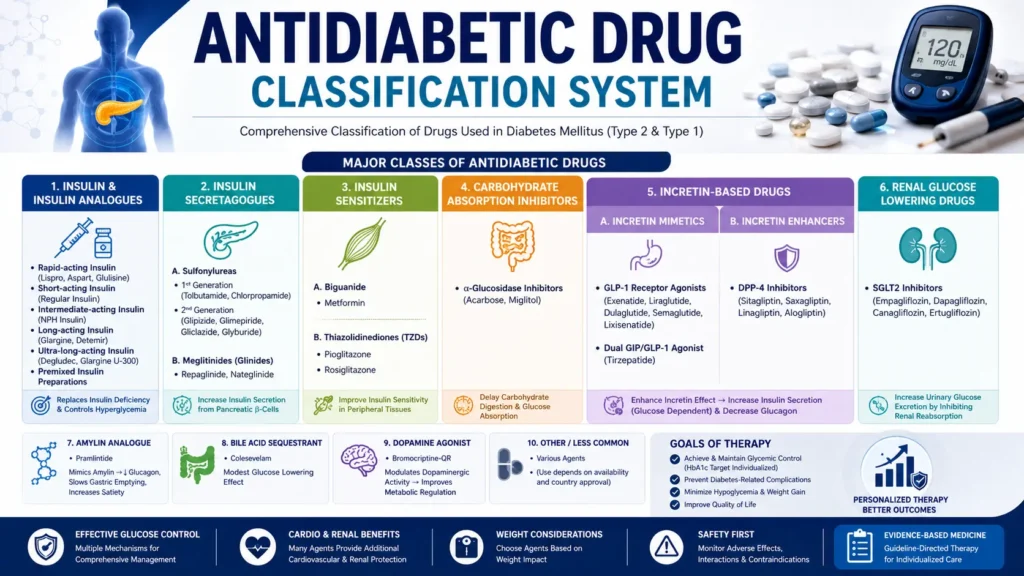
Antidiabetic drugs lower blood glucose through different mechanisms, including reducing hepatic glucose production, increasing insulin secretion or sensitivity, enhancing incretin activity, increasing urinary glucose excretion, and replacing insulin.
| Major Category | Drug Class / Subclass | Important Examples | Primary Mechanism of Action | Main Pharmacological Effect | Hypoglycemia Risk | Effect on Weight | Route | Important Adverse Effects / Notes |
|---|---|---|---|---|---|---|---|---|
| 1. Insulin & Insulin Analogues | Rapid-acting insulin | Insulin lispro, Insulin aspart, Insulin glulisine | Replaces endogenous insulin; ↑ glucose uptake and ↓ hepatic glucose production | Rapid reduction of blood glucose, especially postprandial | High | ↑ | SC | Hypoglycemia, weight gain, injection-site reactions |
| Short-acting insulin | Regular human insulin | Activates insulin receptors → ↑ glucose uptake and ↓ hepatic glucose output | Controls fasting and postprandial glucose | High | ↑ | SC, IV | Hypoglycemia, weight gain | |
| Intermediate-acting insulin | NPH insulin | Provides prolonged insulin replacement | Basal glucose control | High | ↑ | SC | Hypoglycemia, weight gain | |
| Long-acting insulin | Insulin glargine, Insulin detemir | Provides relatively sustained basal insulin activity | Basal glucose control | High | ↑ | SC | Hypoglycemia, weight gain | |
| Ultra-long-acting insulin | Insulin degludec, Insulin glargine U-300 | Very prolonged basal insulin action | Basal glucose control | High | ↑ | SC | Hypoglycemia, weight gain | |
| Premixed insulin preparations | NPH/regular, insulin lispro protamine/lispro, insulin aspart protamine/aspart | Combination of basal/intermediate and prandial insulin activity | Basal + mealtime control | High | ↑ | SC | Hypoglycemia, weight gain | |
| 2. Insulin Secretagogues | Sulfonylureas – 1st generation | Tolbutamide, Chlorpropamide | Close ATP-sensitive K⁺ channels in pancreatic β-cells → depolarization → ↑ insulin release | ↑ Insulin secretion | High | ↑ | Oral | Hypoglycemia, weight gain; older drugs are less commonly used |
| Sulfonylureas – 2nd generation | Glipizide, Glimepiride, Gliclazide, Glyburide/Glibenclamide | Stimulate pancreatic β-cell insulin secretion | ↑ Insulin secretion | High | ↑ | Oral | Hypoglycemia, weight gain | |
| Meglitinides / Glinides | Repaglinide, Nateglinide | Short-acting stimulation of β-cell insulin secretion | Mainly reduces postprandial glucose | Moderate–High | ↑ | Oral | Hypoglycemia, weight gain | |
| 3. Insulin Sensitizers | Biguanide | Metformin | ↓ Hepatic gluconeogenesis; ↑ insulin sensitivity and peripheral glucose uptake | ↓ Hepatic glucose production | Low when used alone | Neutral / modest ↓ | Oral | GI upset; vitamin B12 deficiency can occur; lactic acidosis is rare but serious |
| Thiazolidinediones (TZDs) | Pioglitazone, Rosiglitazone | Activate PPAR-γ → alter gene transcription → ↑ insulin sensitivity | ↑ Peripheral insulin sensitivity | Low when used alone | ↑ | Oral | Edema, weight gain, heart-failure risk; fractures | |
| 4. Carbohydrate Absorption Inhibitors | α-Glucosidase inhibitors | Acarbose, Miglitol | Inhibit intestinal α-glucosidases → delay carbohydrate digestion and glucose absorption | ↓ Postprandial glucose | Low when used alone | Neutral / possible slight ↓ | Oral | Flatulence, abdominal discomfort, diarrhea |
| 5. Incretin-Based Drugs | GLP-1 receptor agonists | Exenatide, Liraglutide, Dulaglutide, Lixisenatide, Semaglutide | Activate GLP-1 receptors → glucose-dependent ↑ insulin, ↓ glucagon, delayed gastric emptying, ↑ satiety | ↓ Glucose; weight loss | Low when used alone | ↓ | Mainly SC; some oral formulations exist | Nausea, vomiting, diarrhea; class-specific precautions |
| Dual GIP/GLP-1 receptor agonist | Tirzepatide | Activates GIP and GLP-1 receptors | Powerful glucose lowering and weight reduction | Low when used alone | ↓↓ | SC | GI adverse effects; hypoglycemia risk increases with insulin/secretagogues | |
| DPP-4 inhibitors | Sitagliptin, Saxagliptin, Linagliptin, Alogliptin | Inhibit DPP-4 → prolong endogenous GLP-1/GIP activity → ↑ glucose-dependent insulin and ↓ glucagon | Modest glucose lowering | Low | Neutral | Oral | Nasopharyngitis, GI effects; class-specific cardiovascular considerations | |
| 6. Renal Glucose-Lowering Drugs | SGLT2 inhibitors | Empagliflozin, Dapagliflozin, Canagliflozin, Ertugliflozin | Inhibit renal SGLT2 → ↓ proximal tubular glucose reabsorption → ↑ urinary glucose excretion | ↓ Blood glucose; natriuresis | Low when used alone | ↓ | Oral | Genital mycotic infections, volume depletion; ketoacidosis can occur |
| 7. Amylin-Based Therapy | Amylin analogue | Pramlintide | Mimics amylin → ↓ glucagon secretion, slows gastric emptying, increases satiety | ↓ Postprandial glucose | Low alone; higher with insulin | ↓ | SC | Nausea; hypoglycemia particularly with concomitant insulin |
| 8. Bile Acid Sequestrants | Bile acid sequestrant | Colesevelam | Mechanism for glucose lowering is not completely established; affects bile acid metabolism | Modest glucose lowering | Low | Neutral / possible slight ↑ | Oral | Constipation, GI effects; drug interactions |
| 9. Dopamine Agonists | Dopamine D2 agonist | Bromocriptine-QR | Modulates hypothalamic dopaminergic activity; improves metabolic regulation | Modest glucose lowering | Low | Neutral / possible ↓ | Oral | Nausea, dizziness, orthostatic symptoms |
| 10. Other / Less Common Agents | Glucose-lowering agents with limited use | Various agents depending on country/approval | Varies | Varies | Varies | Varies | Varies | Availability and clinical use vary by country |
The classification reflects the major contemporary glucose-lowering drug groups, while also retaining important pharmacology classifications such as secretagogues, sensitizers, carbohydrate-absorption inhibitors, and insulin therapy.